01
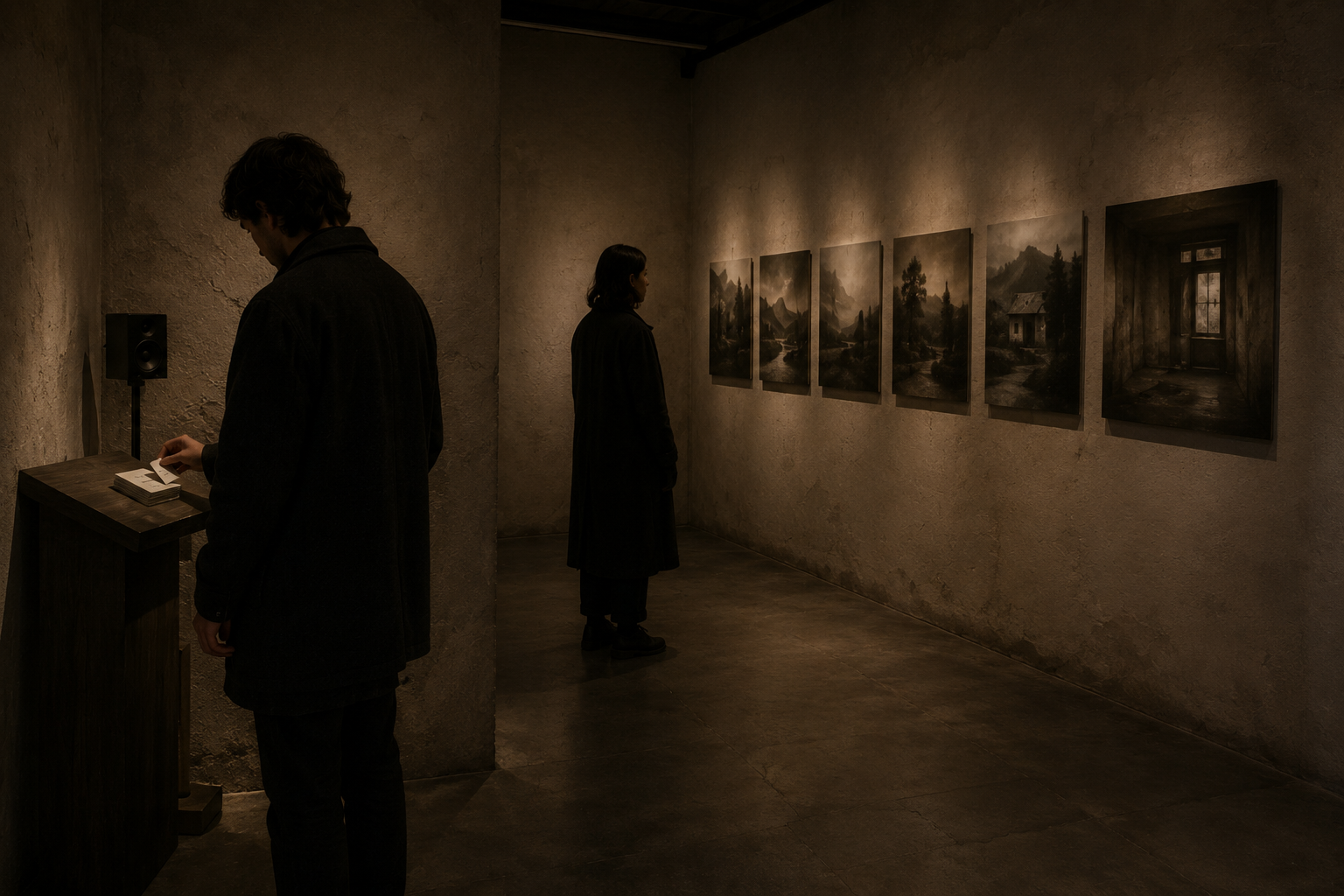
Sightseeing Journey Video I
Approach, threshold, and first encounter.
THE LAST ECHO
exhibition
(digital print art, natural sounds, interaction)
“Some voices disappear. Their echoes remain.”
Practice-based Artistic Research
Visualising the Epirotic Lament
Practice-based artistic research exploring memory, mourning, landscape and intangible cultural heritage through contemporary visual art, field recordings and immersive installation.
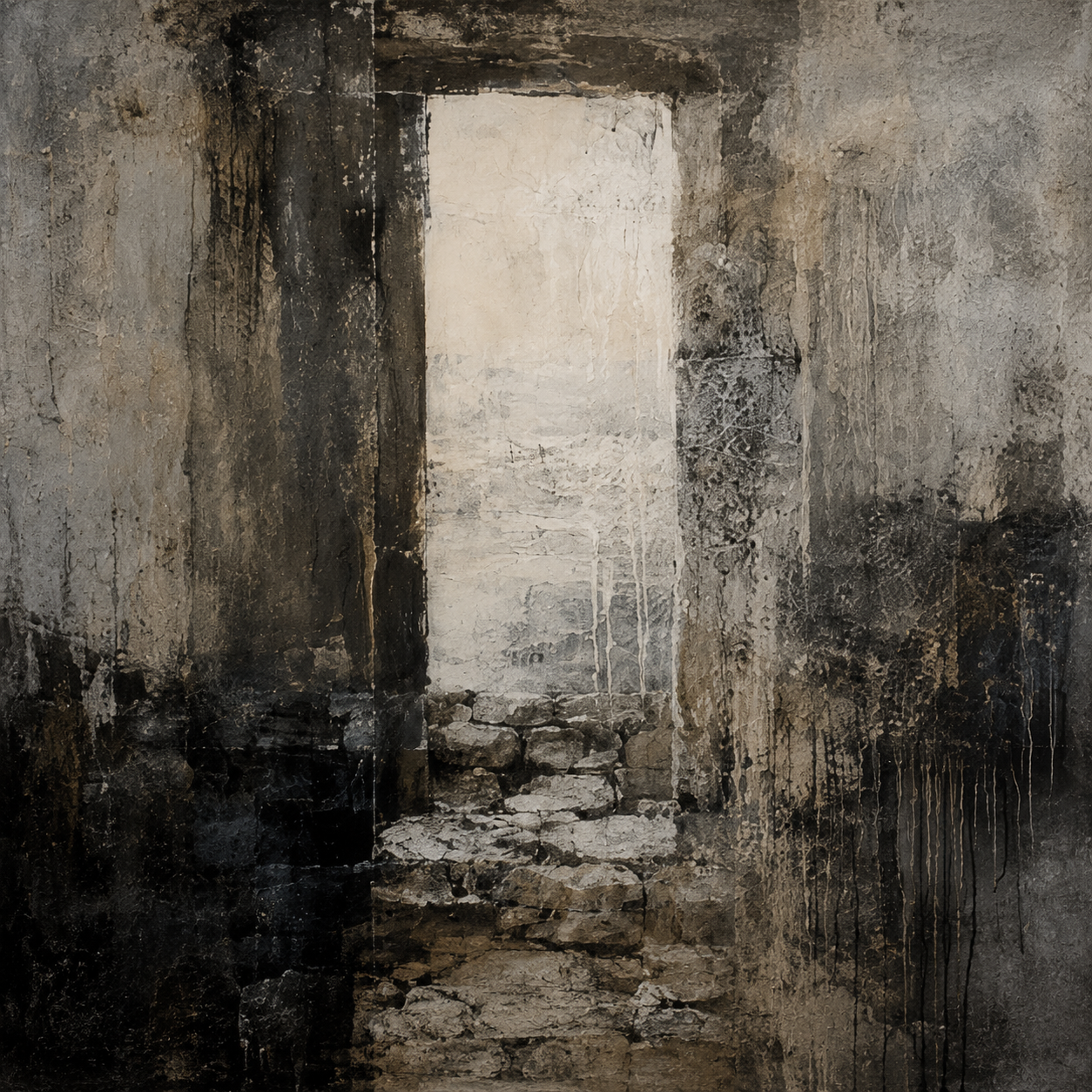
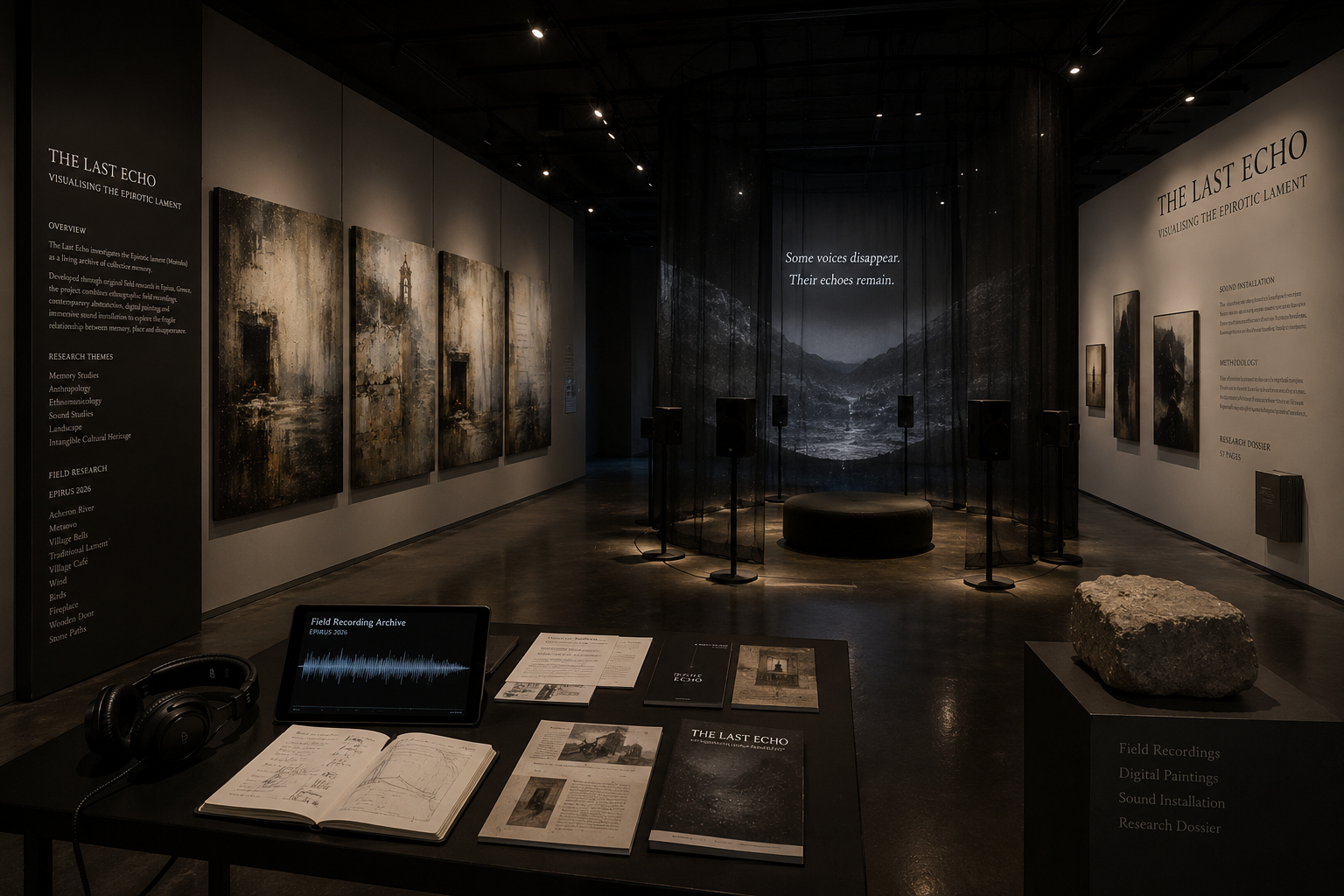
Developed through original field research in Epirus, Greece, the project combines ethnographic field recordings, contemporary abstraction, digital painting and immersive sound installation to explore the fragile relationship between memory, place and disappearance.
Cultural Context
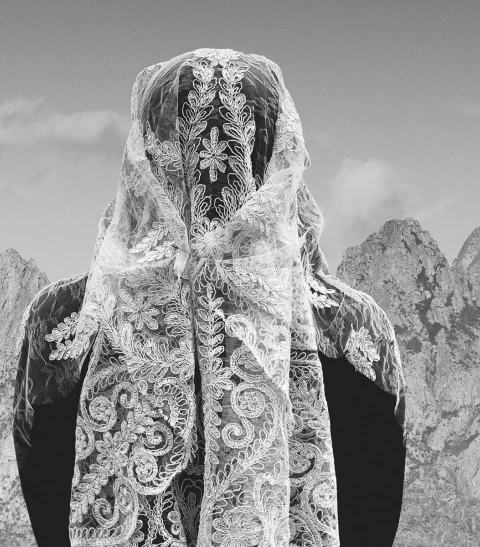
Lament singers were not simply mourners. They guided the dead on their symbolic passage, accompanied moments of separation such as marriage and migration, and transformed personal grief into collective memory. Through ritual and song, they became guardians of remembrance and continuity.
Field Recording
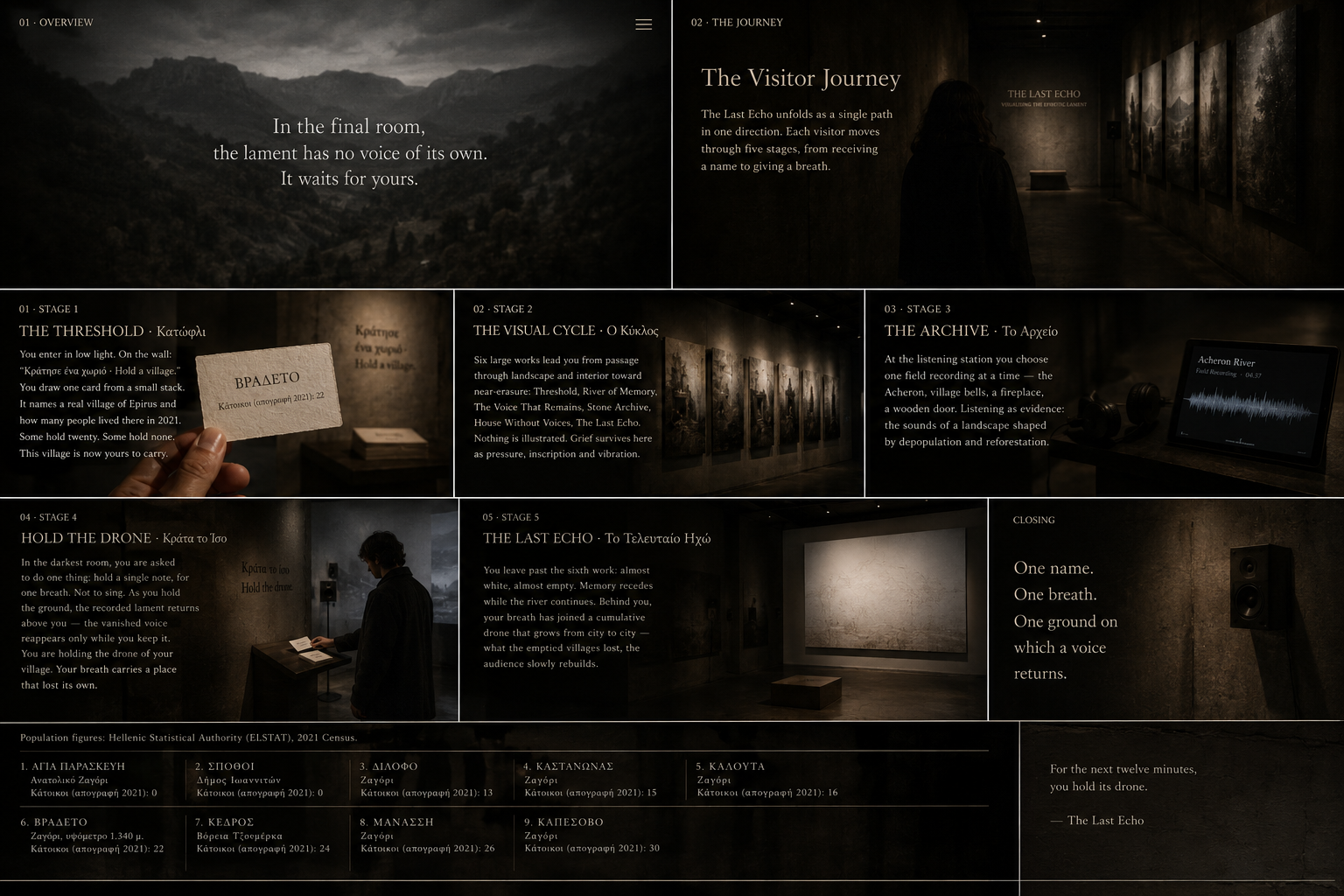
The Last Echo unfolds as a single path in one direction. Each visitor moves through five stages, from receiving a name to giving a breath.
Press to listen to the original field recordings collected by the artist in Epirus.
Preveza, Epirus · 00:56
Continuous water, distant movement and the acoustic depth of the river landscape.
Epirus · 01:24
Bells marking time, distance and the spatial memory of the village.
Epirus · 00:46
Conversation, room tone and the social space through which memory continues to circulate.
Pindus, Epirus · 00:47
Air moving across stone, vegetation and open terrain.
Epirus · 00:25
A living counterpoint within a landscape shaped by depopulation and reforestation.
Epirus · 00:42
Fire, domestic interior and the material rhythm of a house that remembers occupation.
Epirus · 00:04
Wood, hinge and threshold recorded as an acoustic marker of passage and absence.
Epirus · 00:44
Footsteps and surface friction: movement registered through the material archive of place.
Living Memory
Preserving memory through contemporary artistic practice
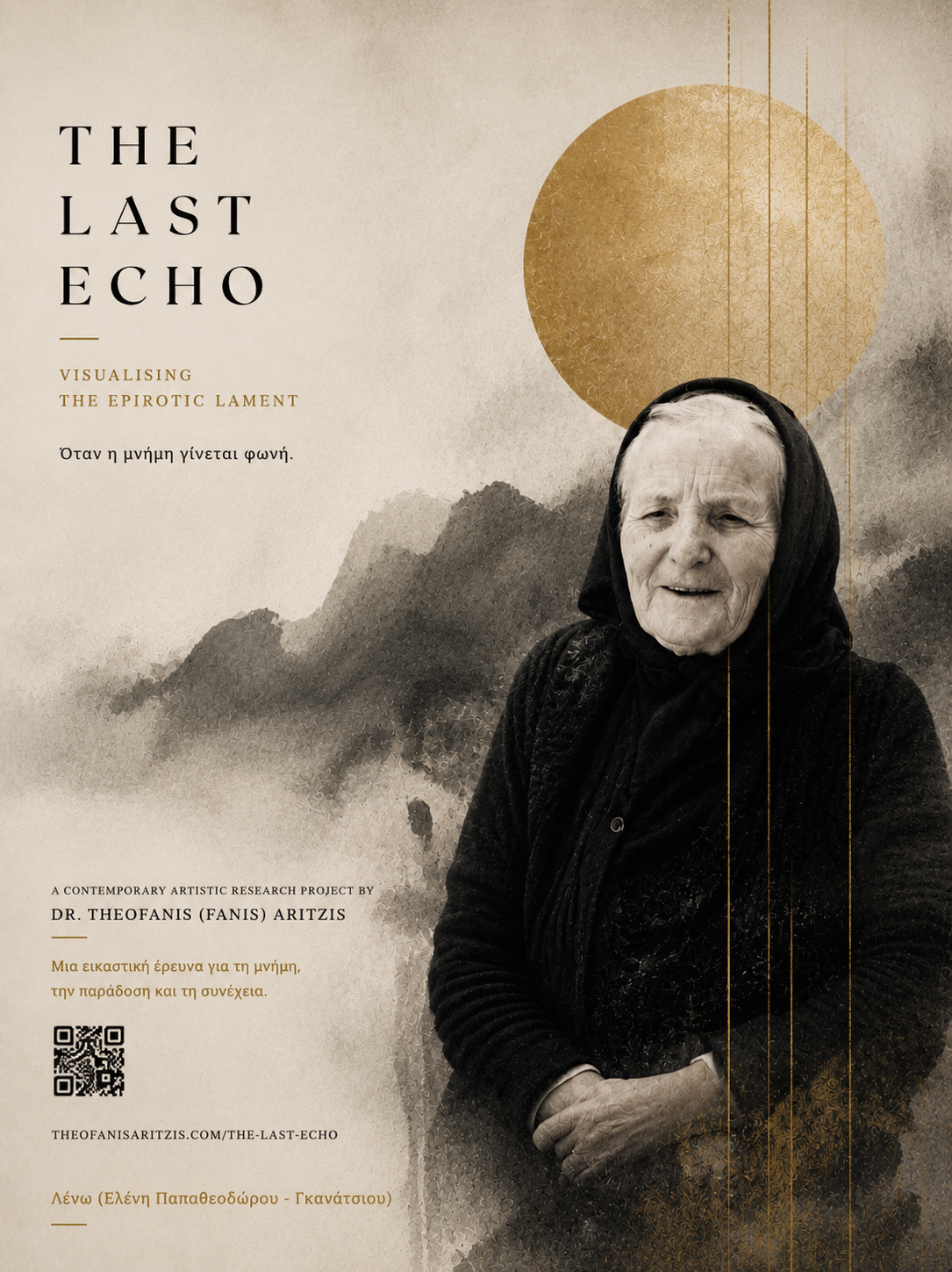
The portrait of Leno, the artist’s grandmother and part of the living tradition of the Epirotic Moiroloi, introduces a personal dimension to the project’s wider exploration of cultural memory.
Six works translate field research into a sequence of thresholds, traces, interiors and disappearing landscapes.
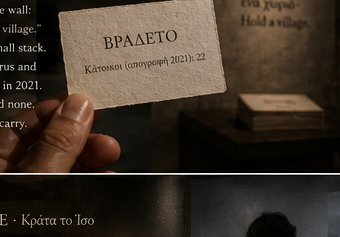
Visitors are invited to do one thing: hold a single sustained note, for as long as one breath lasts. No singing, no performance, no skill. As the note is held, the recorded lament returns in the space above, the vanished voice reappears only while the ground is kept.
Every held breath is anonymised and layered into a cumulative drone that grows from city to city. What the emptied villages of Epirus lost, the audience slowly rebuilds. The visitor does not watch mourning; the visitor becomes the ground on which it survives.
One breath. One ground. A voice that returns.
3,412 breaths held · Athens · Ioannina · Metsovo
Choose the scale that fits your venue. The artwork, sound masters, curatorial structure, and installation guidance are supplied by the artist; the hosting institution supplies the space, production, and technical equipment.
Small exhibition requirements
One room, one clear path, and the full conceptual gesture without visitor recording.
Full exhibition requirements
The complete museum-scale route with spatial sound and the consent-based cumulative archive.
For curators, institutions and residency programmes
Open only the sections relevant to your venue, installation team, or curatorial review.
What the Press Says
Selected editorial features on The Last Echo, its dialogue with the Epirotic lament, and the transformation of memory, mourning, landscape and sound into contemporary visual practice.
Athinorama presents The Last Echo and its encounter between intangible cultural heritage and contemporary artistic practice.
Read the Athinorama feature →Cityportal · CultureCityportal presents The Last Echo and its dialogue between memory, mourning, landscape, sound and contemporary visual practice.
Read the Cityportal feature →GreekAffair · CultureA reflection on the lament as a living expression of memory, identity and cultural continuity.
Read the GreekAffair feature →GreekAffair · ArtsA feature on the transition from traditional lament to the contemporary artistic language of The Last Echo.
Read the GreekAffair feature →Open the 40-second exhibition trailer
The conceptual framework, artistic direction, field research, curatorial decisions and exhibition methodology were developed entirely by the artist.
Artificial intelligence tools (OpenAI ChatGPT and image generation models) were employed exclusively as production assistants to translate artist-directed concepts into digital visual works.
All conceptual authorship, research methodology and artistic decisions remain the work of the artist.

11 · Artist
@monsieur.fanis
LinkedIn · /in/fanisaritzis">faritzis@gmail.com
Instagram · @monsieur.fanis
LinkedIn · /in/fanisaritzis